
Price Question Killing Your Leads? 4 Simple tricks to fix it
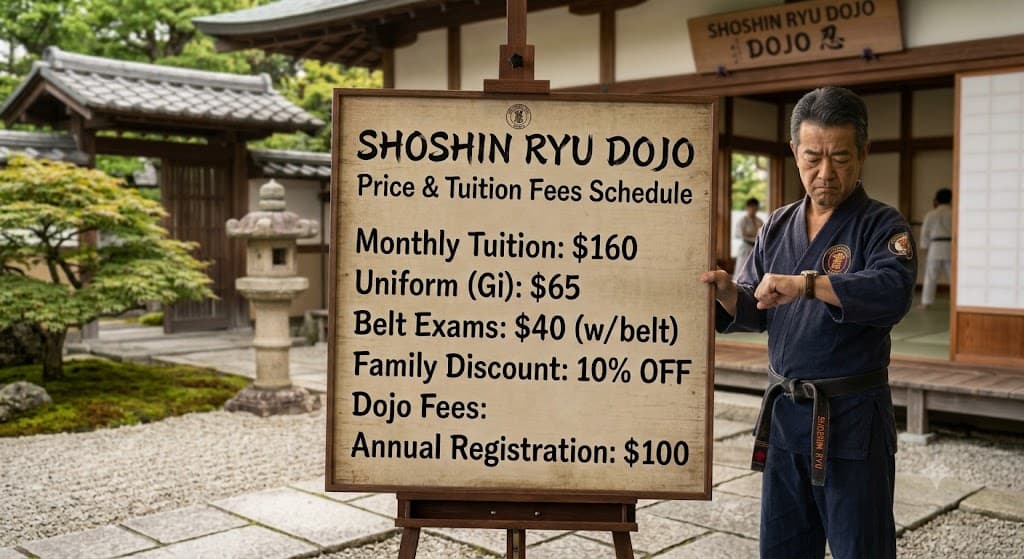
July 8, 2026
If someone asks how much it costs and your answer instantly kills the conversation,
The problem usually isn't your price; it's how you handle the question.
One thing every martial arts school and gym owner eventually learns is this: when someone asks for the price, they're usually not just asking about money.
A lot of times, what they're really asking is: Is this for me? Is this for my kid? Will this help with what I want? Am I too old or out of shape? Am I too much of a beginner? Is it worth it? Am I about to waste my time?
That's what most owners miss.
They think the lead is asking a purely financial question, so they answer with a number, and that usually creates one of two major problems.
Mistake #1: Answering Too Fast.
The first mistake is answering too quickly.
You just fire back the price. ****
No questions, no context, no value.
Now the lead compares you to every other option in town like you're all the same.
That's dangerous because the only thing they have to compare is price; you've turned your business into a commodity.
Mistake #2: Dodging the Question The second mistake is dodging the question so hard that you sound shady.
The lead asks, "How much does it cost?" and the owner says,
"You have to come in first to find out."
That doesn't feel good either, because now the prospect feels like you're hiding something or setting a trap.
The 4-Step Framework to Handle Pricing Questions
So, what's the right move? You don't ignore the question, but you also don't rush to answer it like the number is the whole conversation. Your job is not just to state a price; your job is to start a real conversation so you can solve their problem.
Here is the exact 4-step framework to turn a cold pricing question into a booked trial, without losing the lead:
Step 1: Ask a Few Simple Questions (Slow it Down) Don't be a robot and just fire back a number, but don't dodge the question either. Acknowledge them, and immediately pivot to a qualifying question. This slows the conversation down just enough to shift the focus from price to people.
- What to say: "Sure, happy to help with pricing! Real quick, is this for you or a child?" or "Absolutely! What kind of training are you mainly looking for right now?"
Step 2: Get the Context (Find the Real Problem). Remember, when they ask for the price, they are usually secretly asking, “Will this actually work for me?” You need to figure out their starting point. Are they a parent looking for their kid to build confidence and discipline? Are they an adult trying to lose weight and get back into shape? Are they a complete beginner who is intimidated by martial arts? You cannot sell the solution until you know the problem.
- Why it matters: Once you have this context, you stop being a commodity. You are no longer just another gym on Google; you are a consultant helping them solve a specific problem.
Step 3: Build Value Around Their Goal (Connecting the Dots).
Now that you know what they want, you can validate their needs. Give them a reason to care about your program before you drop the price. If they want to lose weight, highlight your high-energy beginner classes. If they want discipline for their kid, highlight your structured curriculum.
- What to say: "Got it, that helps a lot. Based on what you're looking for, I think our beginner program would be a perfect fit because we focus heavily on [insert their goal here]."
Step 4: Move Them Toward the Trial (The Logical Next Step).
Once you've established relevance, it’s time to offer the next step. Notice that you still haven't locked them into a massive contract over text. You are simply guiding them to the easiest, lowest-risk next step: the trial class. Framing the trial around their needs stops it from feeling like a high-pressure sales trap and starts to feel like a personalized recommendation.
- What to say: "We do have a few different pricing options depending on how often you want to train. But honestly, the best next step is to just come in for a trial. That way, you can see the facility, meet the coaches, and make sure the culture feels like the right fit for you before committing to anything. How does [Day] or [Day] work for you to come check it out?"
The Golden Rule: Context Creates Value
The goal is not to win the pricing text. The goal is to move the person forward. People are not going to decide based on price alone—not if they haven't seen the place, met the coach, felt the culture, or understood the difference between you and the cheaper option down the street.
Price matters. Of course it does. But price without context usually feels expensive. Price after relevance feels completely different.
That's where a lot of owners lose control. They think transparency means blurting out the number right away. That's not transparency; that's lazy selling. Real transparency is helping the lead understand what fits, what to expect, and what the next step should be.
When someone asks for a price, they're usually not telling you no. They're trying to decide if it feels safe to keep going. Ask a few questions. Get some context. Build value around their goal. Then, move them toward the trial.